“It’s important to be kind. You can’t know all the times that you’ve hurt people in tiny, significant ways. It’s easy to be cruel without meaning to be. There’s nothing you can do about that. But you can choose to be kind. Be kind.”
I saved that quote from an article I skimmed, but have since been unable to locate. It resonated with me so hard simply because 1) I think I’m nearly always kind, and 2) I know I’ve hurt people even in my kindness and good intentions. But that quote brought about a whole new perspective on mindfulness in how we talk to people, how we present our ideas, and how we approach life, in general.
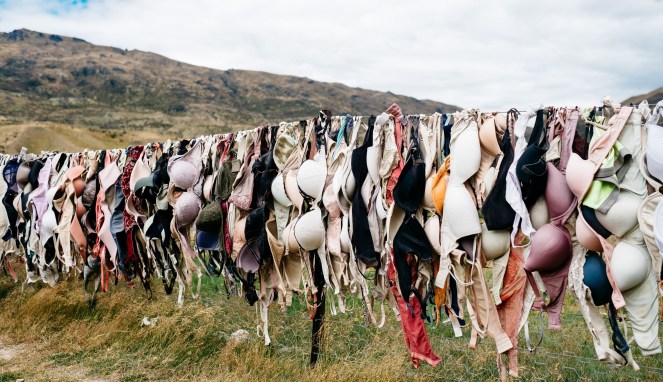
October is Breast Cancer Awareness month. Subject change, it seems, but it will come full circle, I promise.
For me, Breast Cancer Awareness month was fun because I love the color pink. When, all of a sudden, all things pink were in every store in all of our faces, I got excited. Finally, things that weren’t normally pink were being made in pink colors–shoes, coffee mugs, t-shirts, ballcaps, cookware, and even items made for men.
It’s not that I had no compassion for those going through their personal battles with cancer or that I thought any aspect of cancer was fun. I just enjoyed the new pink options and enjoyed seeing different ways companies got creative by working the theme into their products.
I’ve not publicly shared this until now, but back in the spring, in late April, I thought for a hot minute that I had breast cancer. There have been a lot of times that I’ve seen a spot on my skin or have felt a certain way and I jump to this random idea that it’s maybe cancer. My imagination is very vivid, and it sometimes runs away with an idea before I have a chance to catch up to it with any form of logic. But not this time.
I had spent the day in a very productive state because I was getting ready for a yard sale with one of my friends. I delivered a table to her house that we would use that weekend, and when I arrived back home and had settled in a little, I moved a certain way and felt very noticeable tenderness and pain in one of my breasts. For a second, I dismissed it because I used to get that sort of pain for a time every month, but after some dietary modifications, that monthly symptom had gone away. If it weren’t for that, I may have completely dismissed it on this occasion.
On exam, I discovered a large lump. I had so many thoughts, like, “How long has this been here?” “When is the last time I did an exam where I would’ve noticed this?” “How have I not known this was here? This is my *body!” “What will I tell the girls?” “What’s going to happen? Surgery? Something worse?” “Is this my last year?” As I mentioned, my thoughts can easily take off without me.
That experience brought me full circle to the concept of before and after, where everything you’ve known and everything you’ve been suddenly changes with a sharp line down the middle. I’ve had a few of those before and after moments, but this was different.
I immediately called my friend and had a short cry-session and started to pull myself together. I know I practice prevention. I know I take pretty good care of myself.
But still.
I had very little sleep that night and for many nights after. Way too many thoughts and questions flooded my brain.
I went to the doctor office first thing in the morning, and as luck would have it, all of our computer systems were down. Once they knew why I was there, they fit me in right away, and I was referred to diagnostic imaging immediately. They are in the same network, so again, the computer systems were down, so they didn’t want to see me just yet.. until they saw the referral sheet. So I had to go back the next day for a “diagnostic mammogram.” Scary words, no doubt.
I’m thankful for them fitting me in the way they did, though, because otherwise, I would’ve gone all weekend with more questions.
In those waiting rooms, I spent a lot of time collecting my thoughts, saying prayers, breathing mindfully, reflecting on all the ways I practice self-care. I grabbed onto my faith and remembered whose child I am. Either way, I would be ok.
If the tests were positive, I clearly wouldn’t be the first person to go through this, there are many survivors, and if I ended up on the flip side of that, I know where I’m going when I die. If they were negative, I would breathe a sigh of relief and continue to be diligent about prevention. Ideally, I would give praise in either scenario.
I have said before that if I were ever diagnosed with cancer, I would not do chemo. If it could be surgically treated, I would do that, but I have been adamant that I would treat my condition with nutrition. This experience might be my moment of truth. Go through with what I’ve always said or eat those words.
I want to say here that when something big is going on in my life, good or bad, I generally keep to myself until I feel I’m in a totally safe place to share. I am very cautious about sharing with others. I don’t disclose all my goals, my dreams, my fears, my relationships, my vulnerabilities, or my feelings, and in a time like this, I felt vulnerable. If I were going to keep my faith that everything would be ok and picture in my head that every test would come back negative, I needed to be able to keep my thoughts and prayers pure.
Have you ever noticed that when someone is pregnant or talking about starting a family, people start telling their horror stories about pregnancy and hard labor? It puts fear into a woman who is excited about all the wonderful possibilities.
I didn’t want anyone’s horror stories. I needed positivity. I want to encourage you, too, to use discernment with the people you choose to share important events. Once this was all over, I shared my experience with a Christian woman I met through church, and I’m sure she meant well, but not only did she criticize almost every decision made and tell me I should go somewhere else next time, she actually informed me that I was confused and assertively disagreed with me when I said I had faith that everything would be ok.
To the contrary, I had actually kept a pretty clear head once I got my bearings past that first night. But had I invited that kind of attitude/person into my experience while I was going through it, I’m not sure if I could’ve kept that shield in place to keep out the negativity.
Once I had the mammogram, which, by the way, is in my top 20 worst experiences of my life (and I’ve been through more stuff than a bargain shopper at a rummage sale), they had to come back to do more images, including on the side where I wasn’t having problems, or so I thought. For a few minutes, I had a whole new influx of thoughts that didn’t make sense.
After those images and an additional exam by ultrasound, I was referred to a surgeon. Since the computers were down, they advised me to follow up if I didn’t hear back from them, since they didn’t want it to fall through the cracks.
I did not follow up. I’m not saying that’s ok, or that I think it was a good decision, but I was initially referred to a surgeon I didn’t prefer, and thanks to a glitch in my cell service, I had no idea that their office called and left me probably 15 messages telling me how urgently I needed to see them…or a different surgeon.
Once I did get those messages, I just wasn’t ready. What would two more weeks do? What if I could get in to see the surgeon I preferred? What if I just held onto my faith and lived in partial ignorance for a short time? What if I just kept praying?
I rather like my breasts, and every time I thought about the surgeon, I thought about permanent changes to them, and that was hard for me to process.
I fully realized, even then, that prayer doesn’t make me or anyone else bullet proof. I am no more special than the next person who is battling something hard.
We always try to make ourselves bullet proof, don’t we? We don’t want to be sick, injured, or dead. We don’t want our feelings to be hurt. We don’t want our hearts broken. And we often don’t push through the hard moments to the other side. We quit or we break down or we stay home or we just never take a risk and instead keep ourselves in a bubble.
Maybe I was hiding in that bubble for those next couple of weeks. I’m not sure. Either way, I did not let myself freak out, and I kept clear thoughts.
(I also did NO Google searches!)
A lot of those thoughts centered around relationships. People I care about and don’t get to talk to. My daughters. My friends. My dog. The most important thing to me was being able to enrich other people’s lives in some way, because no kidding, when your mortality is brought into plain view, and you picture your own funeral, it’s a whole new perspective.
What am I leaving behind? How am I using my time? What do I have to say? How can I leave a legacy or at least something of value? How have I hurt others, and how can I fix that? How can I build and repair only from here on out?
It took about 6-8 weeks, but that knot I felt completely disappeared, and I have become diligent in self-exam and lymph massage. The internet is full of resources on how to do all that if you need guidance, but please, just don’t let it go unchecked.
Look around you. One in eight women will be diagnosed with breast cancer (and one in 883 men).
Practice prevention. You can find peace in that, just knowing that you’re taking steps to take the best care of yourself. I have a way of getting nutrition from more than 30 different superfoods daily. That at least helps on the days that I don’t do my best, but I’m doing something every day to care for my body.
We can keep pouring money into cancer research, but the truth is, buying pink things will not prevent cancer. Buying pink things will not give so much money to cancer research that we will become bullet proof. Research will never outperform prevention. Guidelines for good health practices exist. What if they’re the cure?
In fact, more than 75% of disease states can be prevented through mindful discipline of preventive practices. Even if they found a total cure today, it takes approximately 17 years for research to catch up to mainstream practice. 17 years! How old will your kids be? How old will you be?
Seventeen years, my friends, is precious time.
I feel like we are so invested in research at this point that no one wants to step up to the microphone and say, “Eat your vegetables. That’s the answer.” So simple. Could you imagine the outrage if that happened?
It may not be the answer, but what if? There are no studies saying that vegetables are bad for you. Some people will tell you that fruits are harmful, but I’m here to remind you that they, too, are an important part of a healthful diet, and key in prevention.
Where I work, a lot of people try to raise money for research. It’s American Cancer Society, Relay for Life, American Heart Association, etc. They have bake sales, days for chili dogs, nachos, sugar on top of sugar, and I always wonder why we buy the very things that contribute to the disease states we are raising money to fight.
Stop the madness. Consider what research has already shown us, practice prevention (I may have mentioned that above), and help drive a movement of health.
According to breastcancer.org, 268,600 cases of invasive breast cancer will be diagnosed in women in the U.S., along with nearly 63,000 of non-invasive cases. But what about genetics?
Another quick story. When I was maybe 8 or 9, my mom told me I would most likely die of cancer. That’s a pretty heavy statement to make to a young child. She told me how cancer skips generations, and her generation would be skipped and fall to me. Moms know everything, right?
That could be part of the reason I’m so quick to give in to the idea of cancer sometimes. And maybe that’s why I’ve always paid attention when “anti-cancer” benefits are cited to certain superfoods.
But I also know that DNA doesn’t have to be our destiny, and that with good health practices and good nutrition, we can turn on or off certain genetic markers. You can literally pass on good DNA to your kids simply by practicing good health. The field of Nutrigenomics is finding that less than 20% of disease is caused by genetics.
That’s exciting news. There is a lot of hope entangled in that.
I want you to know that if you’re going through the real thing, if your experience was drastically different from mine, I see you, and I pray for you.
I could give you 25 more statistics on breast cancer that you can find anywhere, and you’ll probably have some exposure to those all through the month of October, but I’d rather use this time and space to give you some thoughts with emotion, with action.
Today, I want to encourage you to put a designated day in your planner for a breast self-exam. And don’t be afraid to check any other day you think about it.
Plan to have fruits and vegetables with protective health benefits daily. Fruit is easy to transport and takes little to no prep.
Have a salad. Even if it’s iceberg lettuce. Whaaat?! Yes. I said that. Don’t believe ideas that it’s just water or non-nutritive. And it’s better than that bake sale item the Relay team is selling.
Empower your kids with knowledge they can use to protect their health. If just one person does this, I will have done something that will survive beyond the bullet that will eventually come for me, as morbid as that sounds. It’s just reality.
Be kind. You’ve probably seen the quote that says, “Be kind to others. They may be going through something you know nothing about.” It’s so true.
And to those I care about that I’ve hurt in any way, I value you. I can’t know all the times, unless you tell me, of course, but I’m committed to being kind and to lessen the frequency and severity of those times.
Our time and purpose here are precious. Protect them. And protect your ta-tas. Let’s dream of a world where a ribbon is a ribbon, pink is just a color, and neither represents our struggle.
xo.
 Rubber Stamps and Avocados